Office wood floors develop gaps in winter because central heating dries the air and timber shrinks as it loses moisture. Understanding what's seasonal and what signals a real problem helps you decide whether to adjust the building's conditions, plan a repair or call in a specialist.
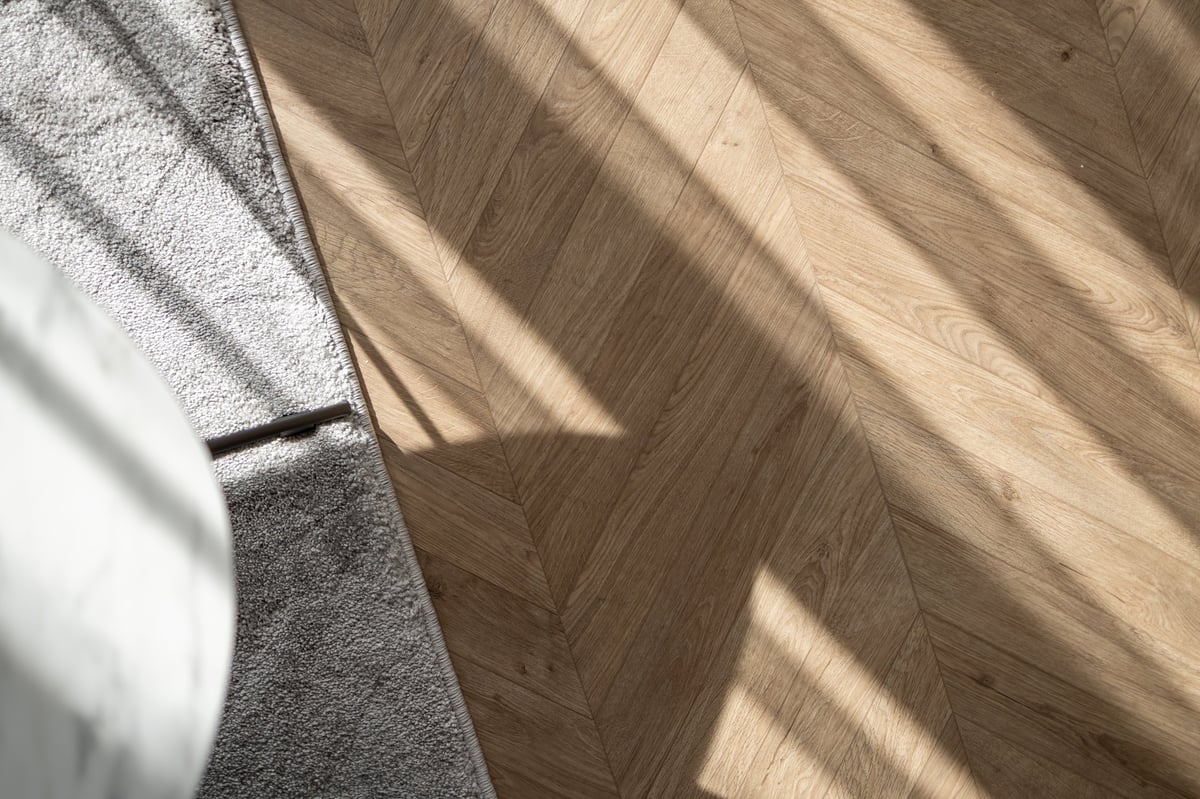
Small gaps that open in the heating season and close again in spring are normal, but gaps that keep widening, boards that cup or lift and parquet blocks that work loose are signs of a bigger moisture problem. Telling the difference helps you decide whether to adjust the building's conditions, plan a repair or call in a specialist for office floor restoration.
40–60%
ideal relative humidity for timber floors
Autumn
when heating season movement starts
Never
sand a cupped floor flat while it's damp
Wood is hygroscopic, which means it constantly absorbs and releases moisture to match the air around it. When the air is humid, boards take on moisture and swell slightly. When it's dry, they give it up and shrink.
In summer, an office with windows open and moderate temperatures usually sits at a comfortable relative humidity. Once the heating comes on in October or November, that changes quickly.
Warm air holds more moisture than cold air
Heating cold outdoor air without adding moisture drives indoor humidity down. Offices with powerful heating, large glazed areas or air handling systems that don't humidify can become very dry indeed.
The floor responds by shrinking, and because each board shrinks across its width, the result is a gap along every joint. Wider boards move more than narrow ones, and solid timber moves more than engineered boards, which have a stable core. Our commercial timber masterclass explains how different species and constructions behave.
Board width
Wider boards move more than narrow ones.
Construction
Solid timber moves more than engineered boards.
Powerful heating and glazing make offices drier than homes.
Some seasonal movement is simply part of owning a real wood floor. Here's a rough guide to what you can live with and what needs attention.
Fine, even gaps between boards that appear in the heating season and close up again in spring
Slight movement around radiators and heat sources
Occasional minor creaks in older suspended floors as boards shrink
Gaps that get wider every winter and never fully close
Cupping, where the edges of boards sit higher than their centres
Crowning, where the centre of a board sits higher than its edges
Boards lifting, buckling or pulling away from fixings
Parquet blocks that rock, rattle or come loose
Cracks or splits appearing along the face of boards
Cupping is a good example of why the season can be misleading. It happens when the underside of a board holds more moisture than its surface. You might expect that only in summer, but in winter it often points to moisture coming from below: a damp subfloor, condensation in a cold void beneath a ground floor or a leak from heating pipes running under the boards.
Underfloor heating is increasingly common in modern office fit-outs, and it can work well with timber. It does need to be controlled sensibly.
Surface temperatures should be kept within the limits set by the floor manufacturer.
Heating should be brought up gradually at the start of the season rather than switched straight to full output.
Sudden or excessive heat dries boards rapidly and is one of the most common causes of wide gaps and splits in otherwise sound floors.
You can't stop timber moving, but you can keep the movement within comfortable limits.
Keep humidity in range
Most flooring manufacturers recommend a relative humidity of roughly 40 to 60 per cent. An inexpensive hygrometer will tell you where your office sits. If it's regularly much lower in winter, speak to your building services team about humidification through the air handling system.
Avoid overheating
Temperatures held steady at a comfortable level cause far less movement than spaces that swing between cold and very hot.
Keep conditions stable over shutdowns
Switching heating off completely over a long break, then back on full when staff return, puts the floor through an unnecessary cycle of movement.
Deal with damp at source
If cupping points to moisture from below, the cause needs fixing before any repair to the floor itself.
Never sand a cupped floor flat straight away
If the boards are still holding excess moisture, they will settle as they dry and the edges will end up lower than the centres. The floor then crowns, and the damage is permanent because the timber removed by sanding can't be put back.
Gap filling needs similar thought. Fill gaps when they're at their very widest and the boards have nowhere to go when they swell again in summer. Fill them when they're at their narrowest and they'll open again in winter. We take moisture readings during our survey and advise on timing and technique.
The boards have nowhere to go when they swell again in summer.
For wider gaps, timber slivers glued to one side of each gap move with the boards and hold up better than resin filler.
Our guide to gap filling for period office floorboards explains both methods in detail.
Most winter movement problems don't mean the floor needs replacing. Once the conditions are corrected, boards can usually be refixed, repaired, filled and refinished.
Replacement only becomes the better option where timber has rotted, split badly or been sanded too thin in the past.

If you're weighing up the two, our article on commercial floor restoration versus replacement sets out how to decide.
If your office floor is gapping, cupping or lifting, we can find the cause and recommend the right fix. We offer free, no-obligation surveys across London and the Southeast. Call us on 0800 917 7770 or email info@quicksandflooring.co.uk.