In the architectural landscape of 2026, a London office, boutique or venue is no longer just a functional space — it is a high-performance asset. For facility managers and property developers, the choice of flooring dictates the acoustics, the air quality, the safety compliance and, perhaps most importantly, the long-term maintenance budget.
Published 26 May 2026 • 5 Chapters • Approx. 15 min read
This guide is designed to help you navigate the technical nuances of timber, from the hardness of the grain to the psychology of floor colours and the strategic use of floor patterns.
The most common misconception in commercial property management is that "hardwood" is always superior and "softwood" is always fragile. In reality, the "best" wood is the one that matches the specific "pressure profile" of your business.
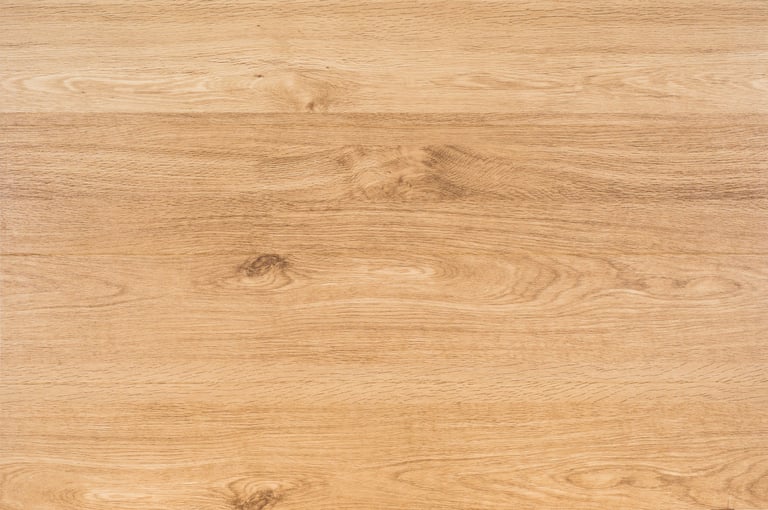
The distinction isn't actually about the physical "hardness" of the wood, but rather the seed structure of the tree. However, for a commercial project, we use the Janka Hardness Scale as our primary metric. This scale measures the force required to embed a small steel ball into the wood, providing a direct indicator of how well the floor will resist "denting" from stiletto heels, rolling office chairs and heavy equipment.
Hardwoods like Oak, Maple and Walnut come from slow-growing deciduous trees. Their dense cell structure makes them the "gold standard" for high-traffic areas.
The backbone of London's commercial interiors. Strikes the perfect balance between high Janka hardness and ease of staining. If your project involves a specific wood floor staining requirement to match a brand identity, Oak is almost always the best canvas.
With an incredibly tight, closed grain, Maple is the go-to for school halls and gymnasiums. It doesn't splinter easily and provides a consistent, "fast" surface for athletic performance.
While slightly softer than Oak, Walnut is prized for its deep, natural colour. Most commonly used in boardrooms and executive suites where prestige and "dwell time" are prioritised over raw durability.
Softwoods like Pine and Douglas Fir come from faster-growing conifers. While they sit lower on the Janka scale, they are the soul of London's historic warehouses and converted industrial spaces.
For businesses that love the look of softwood but fear the maintenance, we use "high-build" commercial floor sanding lacquers. These finishes create a hard "sacrificial" layer on top of the soft wood, allowing you to keep the heritage look while meeting modern durability standards.
In a vacuum, hardwood is generally better for high-traffic commercial environments because of its natural resistance to impact and abrasion. However, "better" is relative to your building's history. In a Grade II listed building, "better" means preserving the original softwood boards using specialised wood floor restoration techniques. The key is the finish: a softwood treated with a 2-part commercial-grade catalyst lacquer can often outperform a hardwood treated with a cheap domestic oil.
| Metric | Hardwood (Oak, Maple, Walnut) | Softwood (Pine, Douglas Fir) |
|---|---|---|
| Durability | Exceptionally High | Moderate (requires better finish) |
| Longevity | 50–100+ Years | 30–50 Years |
| Common Use | Retail, Lobbies, Offices | Heritage Buildings, Studios |
| Maintenance | Lower frequency | Higher frequency |
| Sustainability | Slower renewal rate | Faster renewal rate |
A single, solid piece of timber. It can be sanded many more times than engineered wood, making it a "forever" floor. However, it can be temperamental in buildings with significant temperature fluctuations.
A "sandwich" of real timber over a stable plywood base. This is the preferred choice for modern London offices with Underfloor Heating (UFH) or basement-level retail spaces, as it resists the "expanding and contracting" that can lead to gapping in solid wood.
In the 2026 London commercial market, we are seeing a definitive "flight to quality." As businesses right-size their footprints and upgrade to "Grade A" spaces, the floor is no longer just a surface to walk on; it is a high-performance piece of infrastructure.
To be honest, in a busy London office or retail hub, a floor isn't just an aesthetic choice; it's a punching bag for rolling chairs, heavy foot traffic and the ever-shifting London humidity. This chapter dives into the technical specifications that separate a "pretty" floor from a professional-grade asset that lasts for decades.
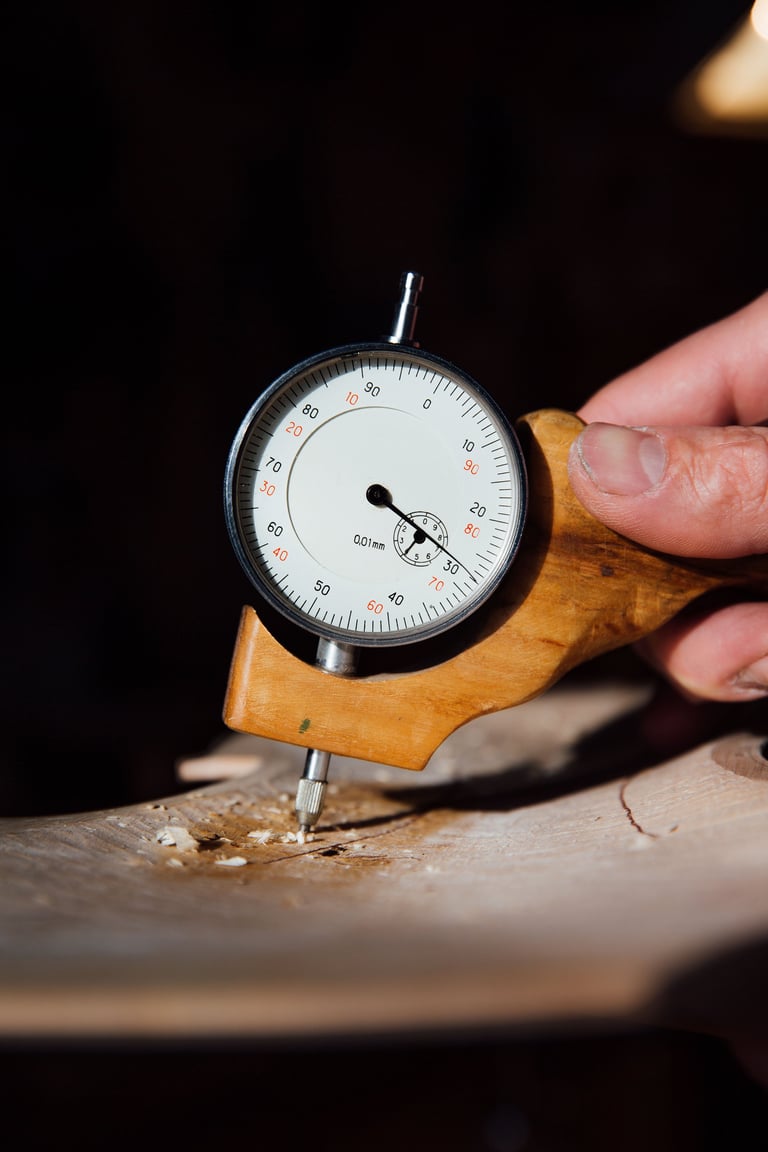
The Janka hardness rating is the industry standard for measuring a wood species' resistance to denting and wear. For a facility manager, this number is a direct indicator of your future wood floor maintenance budget.
The 2026 benchmark for London offices
The "Sports Specialist" for gymnasiums
The ultimate high-traffic tank
While tropical hardwoods like Ipe (3,680 lbf) are incredibly hard, they are often less sustainable. In 2026, many London firms are instead choosing "hardened" domestic oaks that use sustainable heat-treatment technologies to reach Janka ratings of 3,000+, ticking both the durability and ESG boxes.
How do you protect commercial wood floors from rolling chairs?
In a modern office, rolling castors are the primary cause of "finish failure." We recommend two lines of defence: (1) Soft-Tread Castors — replace standard hard-plastic wheels with rubberised wheels designed for timber. (2) Specialised High-Traffic Lacquer — during the commercial floor sanding process, we apply a two-part catalyst lacquer (like Bona Traffic HD) engineered to withstand the sheer forces of office furniture.
How long should wood floorboards acclimatise before installation?
In London, we typically require a minimum of 48–72 hours for acclimatisation, but for large-scale commercial sites, we don't guess — we use digital moisture meters to ensure the wood matches the building's equilibrium moisture content (EMC).
With the 2026 updates to Approved Document L of the UK Building Regulations, energy efficiency is no longer a "nice-to-have"; it's the law. This has made Underfloor Heating (UFH) the default for new office fit-outs and warehouse conversions.
For commercial spaces with UFH, engineered wood is the gold standard. Because it is constructed in layers, it remains stable despite the heat from below. Solid wood, by contrast, is more prone to "gapping" or "cupping" as it reacts to temperature fluctuations.
London's microclimate is notoriously fickle. Many older buildings lack the sophisticated humidity controls of modern towers, meaning the wood can expand in the damp winter months and shrink in the dry, air-conditioned summer. When planning a wood floor restoration, we account for these shifts by using flexible wood floor filling compounds. Unlike traditional rigid fillers, these modern resins move with the building, preventing the unsightly "popping" of filler from between the gaps as the seasons change.
In a commercial setting, your floor is one of the largest visual surfaces in the room. It isn't just something to walk on; it is a subconscious "mood setter". In 2026, forward-thinking London businesses are moving away from generic finishes and instead using their timber to influence customer "dwell time," employee productivity and brand authority.
Light oaks, ash and whitewashed finishes reflect more natural light, making smaller London spaces feel airy. Psychologically associated with transparency and modern, "clean" thinking.
Deep walnuts, espresso stains and smoked oaks absorb light, creating a sense of "gravity," stability and high-end prestige. Frequently chosen for legal firms and luxury Mayfair showrooms.
Traditional honey-coloured oaks are the heart of London hospitality — ideal for pubs, hotel lounges and independent retailers where you want the customer to feel relaxed and welcome.
Can you change the colour of an existing commercial floor?
Yes. This is one of the biggest advantages of wood floor restoration over replacement. During the sanding process, we strip the wood back to its raw state, allowing us to apply a completely new wood floor staining. If your company undergoes a rebrand, we can shift the tone to a cool grey or a contemporary matte oak without replacing a single board.
What are the most popular wood floor patterns for businesses?
While traditional planks are timeless, bespoke floor patterns are the current gold standard for high-end London fit-outs.
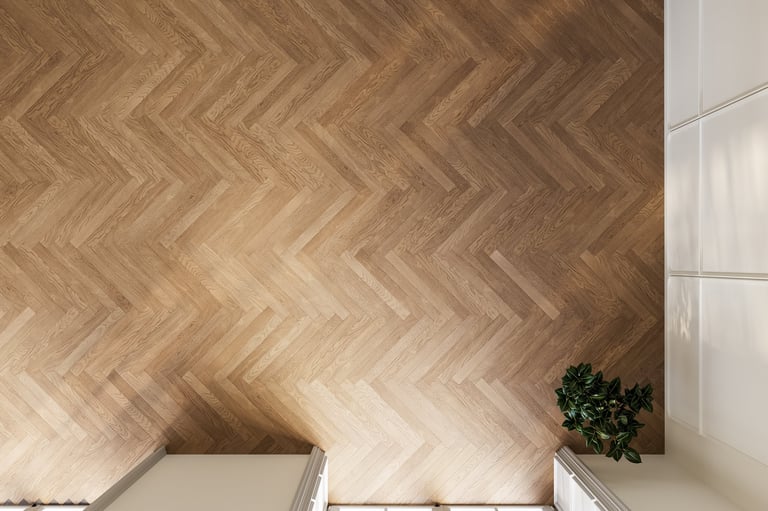
Classic zigzag adding architectural interest to large lobbies. Incredibly stable and excellent at hiding scuffs.
Sharper "V" point creating a "pathway" effect. Retail managers use it to lead customers from entrance to back of store.
The ultimate heritage statement. Intricate panels found in London's listed buildings signalling luxury and history.
In large commercial spaces, you can use patterns strategically to define zones without building walls. For example, using a standard plank in the main work area but switching to a Herringbone pattern in the "breakout zone" creates a subtle mental shift for employees. Furthermore, patterns like Parquet are structurally resilient — because the grain runs in multiple directions, these floors are less prone to "expansion and contraction" issues.
Uniformity: Does the stain stay consistent across 5,000 sq ft? (Requires professional-grade pigments)
Texture: Do you want a smooth, "slick" look or a wire-brushed "tactile" feel?
Lustre: High-gloss or modern "extra-matte" — which suits your office lighting?
In 2026, the "technical nitty-gritty" of a floor is no longer just a checkbox for your insurance provider; it is a critical component of your corporate liability and environmental strategy. For facility managers, understanding the shift from old British Standards to current Euroclasses is the difference between a compliant workspace and a legal headache.

In the UK, the Health and Safety Executive (HSE) identifies slips and trips as the most common cause of workplace injury. To protect your business, your floor must achieve a "Low Slip Potential" rating.
The Pendulum Test is the mandatory standard in the UK. It mimics a human heel striking the floor to measure friction.
When we perform commercial floor sanding, we apply specialised anti-slip lacquers (like Bona Traffic HD Anti-Slip) that are engineered to maintain a PTV of 36 or higher, even when the floor is slightly damp.
As of 2026, the old BS 476 fire standards have been officially withdrawn in favour of the more rigorous EN 13501-1 (Euroclass) system.
Most untreated timber naturally falls into Euroclass Dfl. However, for many London commercial interiors, you will be required to achieve Euroclass Bfl-s1 or Cfl-s1. Bfl = very limited contribution to fire. s1 = minimal smoke production. To achieve this, we apply specialist clear flame-retardant impregnations or intumescent lacquers after the wood floor restoration process.
In 2026, every London business will be scrutinised on its carbon footprint. Your choice of flooring directly impacts your BREEAM rating and your overall ESG score.
FSC & PEFC: Earn credits for "Responsible Sourcing"
Low-VOC: GreenGuard Gold-certified lacquers improve Indoor Air Quality
Circular Economy: Restoration over replacement — the ultimate "green" move
Is "Anti-Slip" lacquer harder to clean?
No. Modern commercial finishes use microscopic particles that provide grip under pressure but remain smooth enough for standard commercial floor cleaning equipment to glide over. You get the safety without the maintenance headache.
Do I need a fire-rated floor for a private office?
Standard offices often only require Euroclass Dfl, but if your office is part of an "escape route" (like a corridor leading to a fire exit), the requirement usually jumps to Bfl-s1. Always consult your building's Fire Risk Assessment (FRA) before choosing a finish.
The most expensive floor you will ever buy is the one you only pay for once. In the commercial world, timber is not a static installation; it is a living material that requires a proactive strategy. The difference between a floor that lasts 10 years and one that lasts 100 years usually comes down to what we call the "Maintenance Gap" — the space between standard janitorial cleaning and professional technical care.
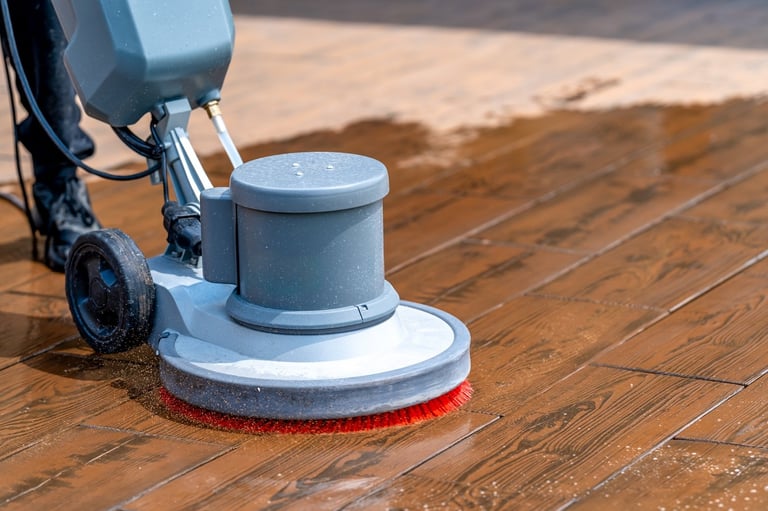
One of the most common reasons for premature floor failure in London offices and venues is improper cleaning. Most general office cleaning contractors use high-PH detergents, excessive water, or "all-purpose" cleaners that can chemically strip the protective lacquer from a wood floor over time.
For a commercial site, a maintenance contract is your best insurance policy. It shifts the responsibility from a general cleaner to a flooring specialist. A professional commercial floor cleaning contract typically involves:
To manage your budget effectively, you should view your floor through a decade-long lens. Here is how a high-performance wood floor maintenance plan typically looks:
Routine professional cleaning and "screen and recoat" services in high-traffic zones (lobbies and lift entrances).
A building-wide "deep scrub and reseal" to restore the lustre and slip-resistance rating.
A full commercial floor sanding and restoration. By following the previous steps, this project will be much faster and require less wood removal because the timber has been protected by a healthy layer of finish for the entire decade.
How much do floor fitters charge per day?
In a commercial context, we usually move away from "day rates" and toward fixed project pricing based on square footage and technical requirements. The cost depends on area size, pattern complexity, turnaround speed (e.g., overnight shifts), and finish type. A fixed quote protects your business against "budget creep" and ensures the team is incentivised to work efficiently.
Can wood floors be restored without closing the business?
Yes. Modern wood floor maintenance is built around business continuity. By using HEPA-filtered, dust-free machinery and fast-curing lacquers, we can often treat floors in sections. For many London businesses, we work in "phased shifts" (Friday evening to Sunday night), ensuring the surface is dry and ready for foot traffic by Monday morning.
Choosing the right timber, the perfect stain and a compliant finish is only the first half of the journey. The second half is ensuring that the asset is managed with the same level of expertise. Whether you are walking on the original pine boards of a Shoreditch warehouse or a brand-new engineered oak lobby in Mayfair, your floor is a testament to your brand's quality.
At Quicksand Flooring, we don't just provide a surface; we provide a partnership. From the first site survey to the tenth year of maintenance, we are here to ensure your London property stays prestigious, safe and sustainable for the long haul.
Whether you are overseeing a single-floor boutique or a multi-site corporate estate, this checklist ensures that your timber floors remain safe, prestigious and cost-effective.
By integrating these checks into your standard building audits, you can effectively double the lifespan of your floor's finish, ensure 100% compliance with UK safety standards, and provide your procurement team with the data they need for long-term budget planning. Use this tool quarterly to bridge the gap between daily cleaning and specialist restoration.
| Frequency | Action | Purpose |
|---|---|---|
| Daily | Dry sweeping / pH-neutral damp mop | Remove abrasive grit |
| Quarterly | Deep scrub & technical audit | Identify early finish wear |
| 2–3 Years | Screen & Recoat (Maintenance) | Restore the "sacrificial" layer |
| 7–10 Years | Professional Restoration | Full re-sand and re-seal |
From the first site survey to the tenth year of maintenance — we provide a partnership that keeps your London property prestigious, safe and sustainable.
Or email us at info@quicksandflooring.co.uk