Booking a floor restoration job without a site inspection first is a bit like commissioning building work based on a phone description of the property. The contractor is essentially quoting blind, and you're agreeing to work without either party really knowing what's involved. For commercial clients, especially, where the scale, disruption and costs are considerably greater than in a domestic project, a proper site inspection isn't an optional extra. It should be treated as a basic requirement. When a company offering commercial floor restoration is willing to visit your site at no charge before committing to a price, that tells you something useful about how they operate.
A thorough site inspection is not a salesperson walking around with a clipboard and a tape measure. It should be conducted by someone with genuine technical knowledge of floor restoration, ideally one of the people who will actually carry out the work.
The inspector should examine the floor in detail: the species and thickness of the wood, how many times it may have been sanded previously, whether there are areas of damage, lifting, or movement that need addressing before sanding can begin and what the subfloor situation looks like. In a commercial setting, they should also assess the environment itself: ceiling heights relative to dust extraction equipment, access points, the proximity of sensitive areas like server rooms or stock storage and any fixed furniture or fittings that will need to be worked around.
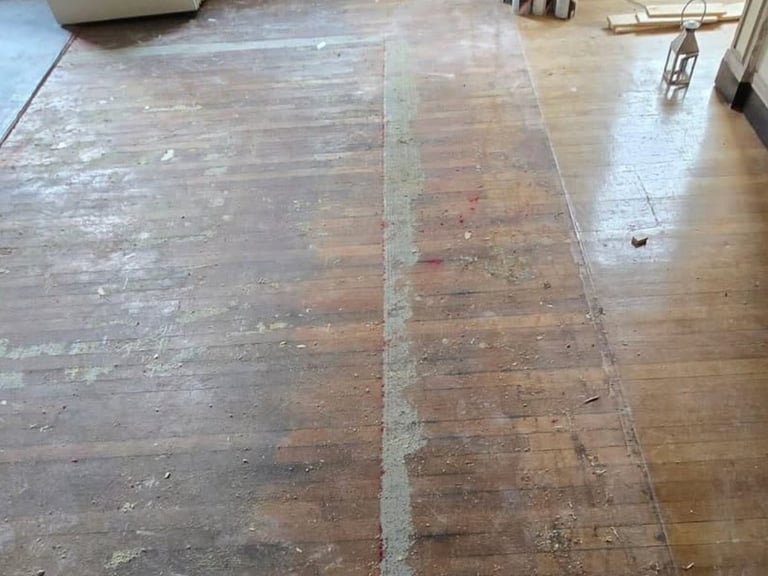
"A competent inspector will spot things during a visit that they cannot spot from a photograph or a floor plan — especially in older commercial buildings where repairs have been carried out at different points using different materials."
The most obvious benefit is an accurate quote. When a company understands exactly what they're dealing with before they price the job, there's far less room for surprises once work begins. Variations and additional charges that arise mid-project are a common source of frustration in commercial flooring contracts, particularly when the original quote was based on incomplete information.
A site visit also gives you an early read on how the company operates. Notice how the inspector conducts themselves. Are they thorough, or do they seem to be going through the motions? Do they look closely at the floor and ask considered questions, or do they measure up and leave within ten minutes? The care they bring to an inspection is usually a reasonable indicator of the care they'll bring to the work itself.
No surprises or mid-project variations when the company knows exactly what they're dealing with.
The care they bring to an inspection is a reliable indicator of the care they'll bring to the work.
Out-of-hours work, phased scheduling, and dust management all need proper on-site discussion.
Going into a site inspection with a prepared list of questions will help you make better use of the visit and give you a much clearer basis for comparing different companies.
A good inspector explains the floor's condition in plain terms and flags issues directly.
Ask how many passes, which finish, and why — specifically for your floor type and traffic levels.
Can they work around your business hours? What dust management system do they use?
How is it communicated, and how is additional scope agreed and priced?
If you'd like to arrange a free site inspection for your commercial property across London or the South East, contact the Quicksand Flooring team. We're happy to visit your site, assess your floors thoroughly, and provide you with an honest, detailed quotation before any work is agreed.
Or email us at info@quicksandflooring.co.uk