In any high-traffic London space, from the light-filled galleries of South Kensington to the bustling corridors of a City law firm, safety is often the silent partner of great design. While we all want a floor that looks prestigious, the reality of a London spring involves wet umbrellas, damp coats and heavy boots. In these conditions, a beautiful floor can quickly become a liability if it hasn't been treated with the right technical respect.
For a business owner, ensuring your surfaces are slip-resistant isn't just about being a good host; it is a critical part of meeting UK Health and Safety Executive (HSE) standards and protecting your company from the rising costs of injury claims. When you invest in professional floor sanding, you are buying peace of mind as much as a polished finish.
If you've ever looked into the legalities of public flooring, you've likely come across the term "PTV." In the UK, this is the industry-standard measurement for slip resistance. To put it simply, a Pendulum Test mimics a human heel striking the floor. For a surface to be considered "low slip potential" — which is the benchmark for most public buildings — it generally needs to achieve a PTV of 36 or higher in both wet and dry conditions.
During a commercial floor sanding project, we don't just guess at safety levels. We use specialised lacquers that are laboratory-tested to meet these exact requirements. It's one of the primary reasons we advise businesses to avoid domestic-grade finishes. A product designed for a quiet living room won't have the grit or the chemical structure to maintain a safe PTV under the constant friction of hundreds of pairs of shoes every day.
"For a surface to be considered 'low slip potential' — the benchmark for most public buildings — it needs to achieve a PTV of 36 or higher in both wet and dry conditions. A domestic-grade finish simply won't hold up to this standard."
A common concern for designers and luxury retailers is that "anti-slip" means "industrial and dull." There's a persistent myth that a safe floor has to feel like sandpaper or look like matte plastic.
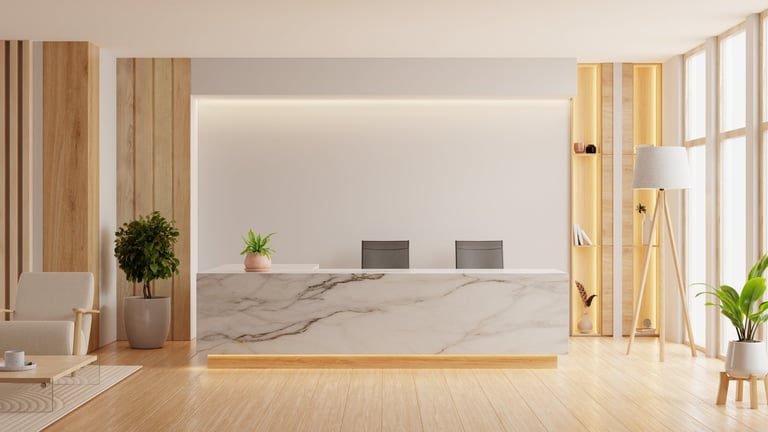
Thankfully, the technology behind our commercial floor sanding finishes has advanced significantly. Modern anti-slip lacquers, such as the Bona Traffic HD Anti-Slip range, contain microscopic particles that provide the necessary "bite" for shoes without changing the visual depth of the wood.
This means you can still achieve a beautiful silk or satin sheen that highlights the timber's natural grain, while knowing your floor is doing its job to keep people upright. The grip is felt, not seen, allowing the prestigious look of your property to remain front and centre.
Anti-slip lacquers contain microscopic particles that provide grip without altering the wood's visual depth or sheen.
The grip is felt, not seen. Achieve a beautiful silk or satin sheen while meeting UK safety standards.
It is tempting to look at a quote for a standard residential sand-and-seal and wonder why flooring services for a commercial site are priced differently. The difference lies in the liability. If an accident occurs on your premises and the floor is found to have been treated with a non-compliant finish, your insurance may not cover the claim.
Professional commercial floor sanding is an investment in your business's future resilience. We provide the technical data sheets for the products we use, which serve as your "paper trail" for safety compliance. Furthermore, these high-performance finishes are much more resistant to the "buffing" effect of foot traffic. Over time, cheap finishes can actually become more slippery as they are worn smooth by use; a dedicated commercial lacquer is designed to maintain its slip-resistance rating for years, even in the busiest environments.
If an accident occurs on your premises and the floor is found to have been treated with a non-compliant finish, your insurance may not cover the claim. Professional commercial sanding provides the technical data sheets you need as a paper trail for safety compliance.
Safety doesn't end when the final coat of lacquer dries. The way you clean your floor is just as important as how it was sanded. Using the wrong "off-the-shelf" cleaning products can leave a greasy residue that completely nullifies the finish's slip resistance.
As part of our comprehensive wood floor maintenance advice, we provide your cleaning teams with a clear guide on using pH-neutral, residue-free cleaners. By staying on top of the small details, you ensure that your floor remains a safe, beautiful asset that welcomes your clients in, rather than one that puts them at risk.
Use only pH-neutral, residue-free cleaning products
Avoid "off-the-shelf" cleaners that leave greasy residues
Schedule periodic inspections to verify slip resistance is maintained
Keep the technical data sheets from your restoration as a safety compliance record
Is your floor as safe as it is stylish? Reach out to Quicksand Flooring today to discuss our slip-resistant options and to book a site survey. We'll help you ensure your property is fully compliant with UK safety standards while maintaining its premium look.
Or email us at info@quicksandflooring.co.uk