Parquet is one of the most beautiful floor types you'll find in London's older buildings, but one of the most unforgiving to restore. The geometric patterns, the varying grain directions, the age of the wood itself — all of it means that a standard floor sanding approach simply won't do. If you're looking for parquet floor sanding in London, the most important thing you can do is understand why this work is categorically different from straightforward plank sanding, and what to look for in a company that actually knows what they're doing.
Most hardwood floors run in a single direction. Sanding them requires care and the right equipment, but the process follows a relatively consistent logic. Parquet doesn't offer that. Whether it's herringbone, basket weave, chevron or a more elaborate period pattern, the blocks are laid at varying angles to one another. That means the grain direction shifts constantly across the floor, and sanding technique has to shift with it.
Sand across the grain on a standard plank floor and you'll leave scratches. Do the same on parquet, and you risk tearing up the surface of blocks that may be decades or even a century old, with no straightforward way to replace them. The sanding sequence, the grit progression, the angle of approach — all of it has to be managed with a precision that only comes from having done this kind of work many times before.
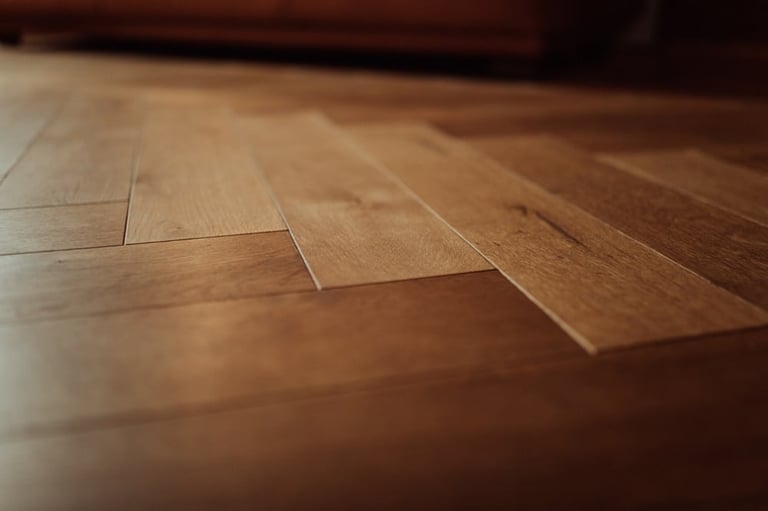
There's also the question of block depth. Original parquet blocks, particularly in Victorian and Edwardian properties, were laid thick enough to withstand multiple restorations over their lifetime. But that tolerance isn't unlimited, and blocks that have already been sanded several times may have very little material left. An experienced specialist will assess this at the outset and adjust their approach accordingly. Someone without that experience may not spot the warning signs until it's too late.
Parquet restoration cannot be done well with standard floor sanding machinery alone. The angles and tight geometry of the pattern mean that large drum sanders, which are the workhorses of most plank floor jobs, have significant limitations on a parquet surface. Edges, corners and the areas where block directions change require specialist equipment capable of working closely and precisely without damaging the pattern.
Companies serious about parquet tend to use edge sanders and smaller finishing machines alongside their main equipment, and many use machinery from specialist manufacturers designed specifically for intricate wood floorwork. If a company mentions the specific equipment they use and can explain why they've chosen it for parquet work, that's a good sign you're talking to someone who approaches the job with genuine care rather than a one-size-fits-all mentality.
Getting the surface back to a smooth, even condition is only part of the job. What goes on afterwards has just as much bearing on how the floor looks and how long it lasts. Parquet has particular requirements here because of how the wood responds to moisture and temperature changes over time. Blocks can expand, contract and shift slightly at the joints, and a finish that isn't appropriate for this kind of movement can crack, peel or look uneven within a short period.
An oil or hard wax oil finish tends to work well on parquet because it penetrates the wood rather than sitting on its surface as a surface film. This means the finish moves with the wood rather than against it. That said, the right choice depends on the specific wood species, the age and condition of the blocks, whether the floor is in a domestic or commercial setting, and the amount of foot traffic it receives. A specialist can walk you through those considerations and recommend something appropriate. A generalist will often default to whatever they use on everything else.
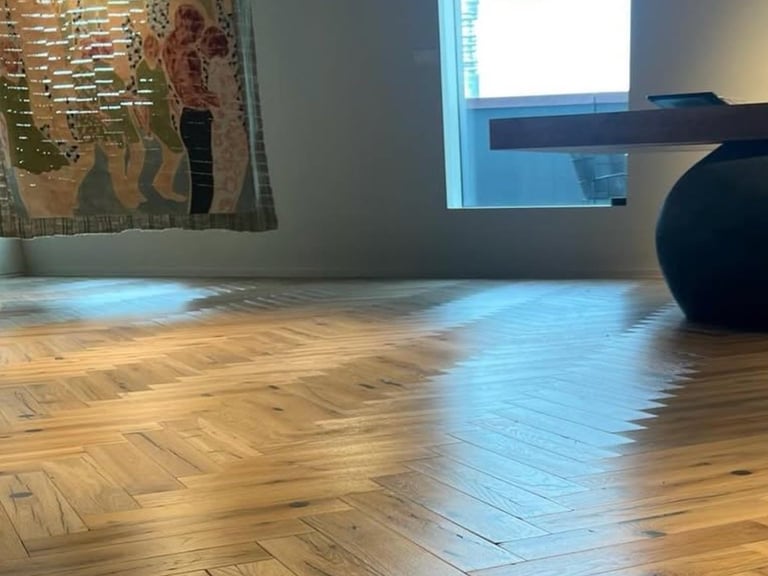
The word "specialist" is used loosely in flooring, so it's worth digging a little deeper than a company's own description. A few things will tell you quite quickly whether you're dealing with genuine expertise.
Ask to see the previous parquet work specifically. Not plank floors, not engineered boards — parquet. A company with real experience in this area will have a portfolio of parquet jobs they're happy to share, and the quality of the finished patterns will be evident.
Look for even sanding, clean block edges, no grain tears, and a finish that brings out natural character without obscuring the pattern.
Parquet restoration requires sustained practice. One or two jobs a year isn't enough to maintain genuine expertise.
How do they assess block depth? What if they find damaged blocks? Clear answers signal genuine experience.
Parquet floors in period residential properties often come with the added complication of age. Original Victorian or Edwardian blocks may have been laid on a bitumen adhesive that becomes relevant during any repair or replacement work. Some areas of the floor may have been patched or replaced at different points in its history with blocks that don't quite match, either in thickness, species or patina. A specialist understands how to work with that kind of history rather than against it.
In commercial settings, parquet floors in hotels, restaurants, period offices, and public buildings tend to experience high foot traffic, which means the restoration approach and finish specification must account for durability as much as aesthetics. The company you choose should be comfortable discussing that balance and advising on ongoing maintenance to protect the restoration over time.
A well-restored parquet floor is genuinely something to be proud of. The pattern comes alive, the grain shows its character, and the floor can look as good, or even better, than when it was first laid. Done badly, the pattern is disrupted, the surface is uneven, and the damage can be difficult or impossible to fully remedy without starting again.
Choosing a genuine specialist rather than a general floor sanding company costs no more in most cases and ensures the work is done in a way that honours the floor rather than compromises it.
If you have a parquet floor that needs restoring and you'd like to talk to a team with genuine experience in this area, get in touch with Quicksand Flooring. We're happy to discuss your floor's needs and provide an honest assessment of the work involved.
Or email us at info@quicksandflooring.co.uk